
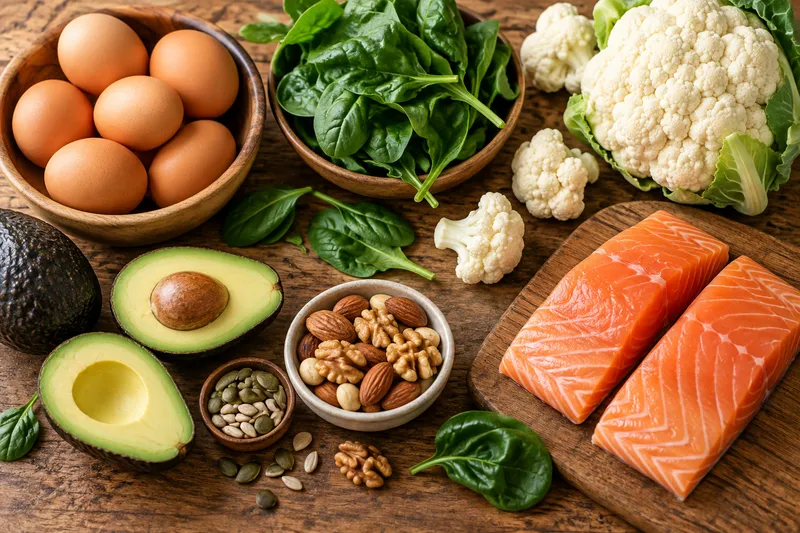
A food list can make the overlap between paleo and keto easier to understand. It is not a complete meal plan, and no single ingredient guarantees ketosis.
Ingredients commonly used
| Food group | Examples | Keep in mind |
|---|---|---|
| Vegetables | Leafy greens, broccoli, cauliflower, courgettes, mushrooms | Variety matters; carbohydrate content and portions differ. |
| Protein foods | Fish, eggs, chicken, turkey, unprocessed meat | Choose a varied mix rather than relying on processed meat. |
| Fats and flavour | Olive oil, avocado, nuts, seeds, herbs, lemon | Use amounts that suit your overall meal and needs. |
| Fruit | Small portions of berries | Paleo permits fruit; keto limits may restrict the quantity. |
Foods usually excluded
Strict paleo approaches generally exclude wheat, rice and other grains, beans and lentils, and dairy. Keto commonly limits sugar and starchy foods, but does not automatically exclude dairy or every processed food.
Do not confuse exclusion with poor quality
Wholegrains, pulses and dairy can be part of nutritious diets. Their exclusion is a feature of a dietary pattern, not evidence that they are inherently harmful. Replacing them requires thought about fibre, calcium and overall variety.
A small supermarket starting list
Try eggs, frozen broccoli, courgettes, salad leaves, tinned fish, plain chicken, olive oil, lemon and a small bag of unsalted nuts. Check labels for ingredients and allergens. You do not need specialist bars, powders or branded keto foods.
Use these ideas alongside our everyday meal swaps, and seek individual advice if you plan to remove whole food groups.
Sources & further reading
- British Dietetic Association: low-carbohydrate diets
- Diabetes UK: ketones and ketogenic diets
- Healthdirect: ketogenic diet overview