
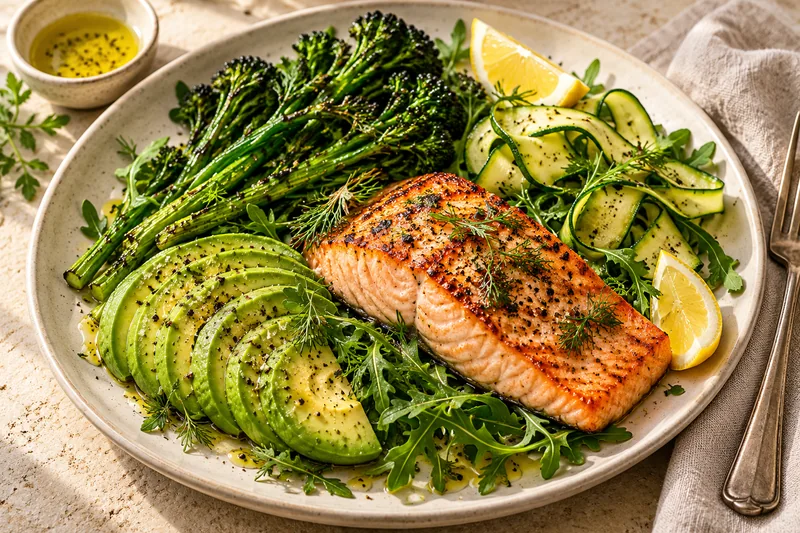
Paleo keto is an informal label for combining two approaches to eating. Paleo puts the emphasis on food selection; keto puts the emphasis on carbohydrate intake. Combining them generally makes the range of foods narrower than following either approach alone.
Paleo is about food choices
A typical paleo-style approach includes vegetables, fruit, meat, fish, eggs, nuts and seeds. It usually excludes grains, pulses and dairy. Definitions vary, and the idea that one precise modern menu reproduces an ancestral diet is an oversimplification.
Keto is about carbohydrate restriction
A ketogenic diet restricts carbohydrate enough to encourage the body to produce ketones. The BDA describes very-low-carbohydrate diets as typically providing 20–50g of carbohydrate a day. That is a description, not a personal target: needs and responses differ.
Where the two meet
Fish with leafy vegetables and olive oil can fit both patterns. A paleo meal with sweet potato or lots of fruit may not fit a ketogenic carbohydrate limit. A keto meal with cheese may not fit a strict paleo approach. Labels alone cannot tell you whether your overall diet is suitable or nutritionally adequate.
Start with understanding, not restriction
Consider why you want to change your diet and whether a less restrictive approach would meet the same goal. Removing food groups can make getting enough fibre and some nutrients harder. A registered dietitian can help assess the trade-offs.
Explore our food-list guide and read the evidence and safety overview before making substantial changes.
Sources & further reading
- British Dietetic Association: low-carbohydrate diets
- Diabetes UK: ketones and ketogenic diets
- Healthdirect: ketogenic diet overview